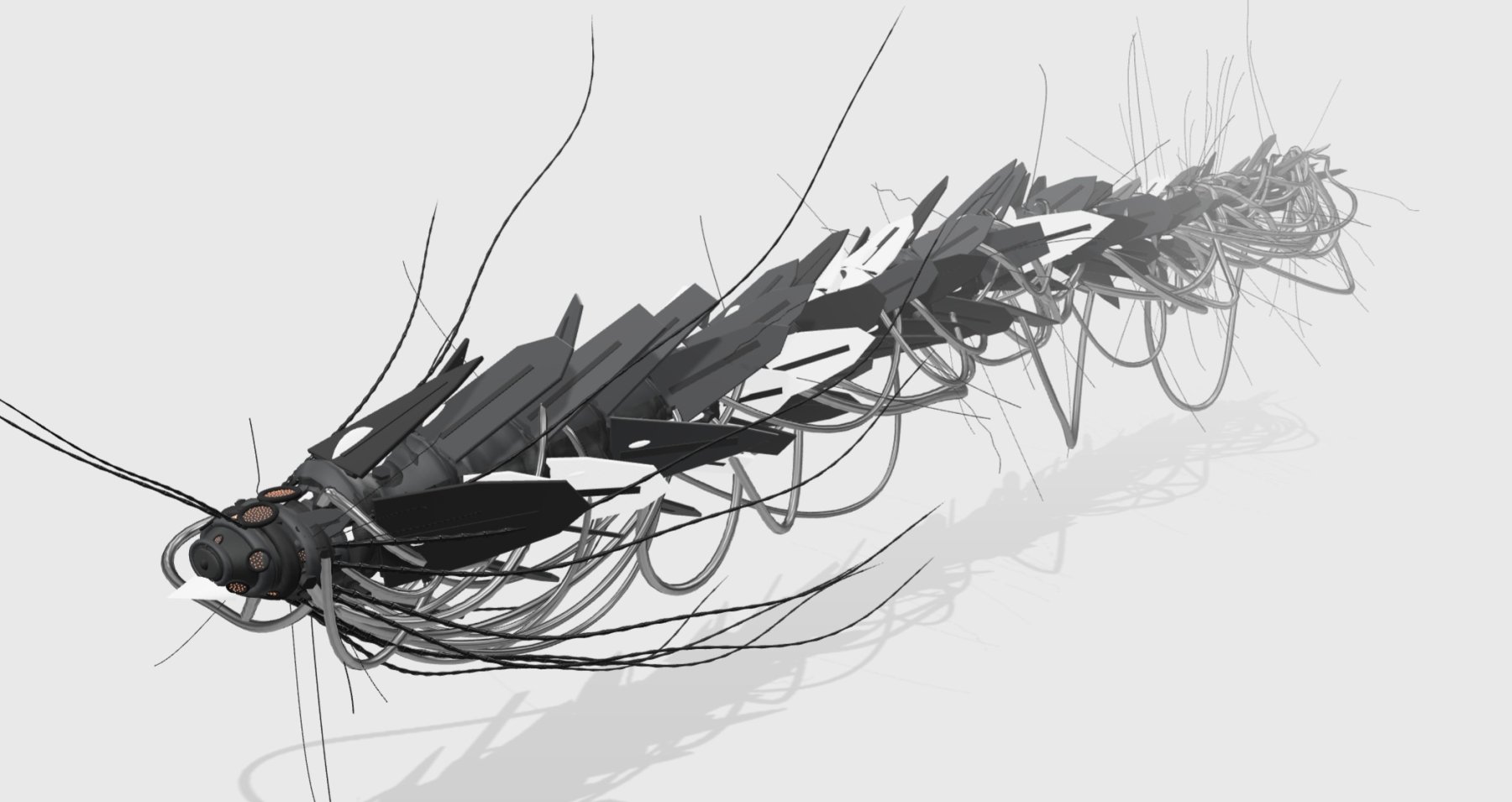
THE VERMIS - The Machine is the Other
Amidst all the horrors and terrors of the machine, I only found myself.
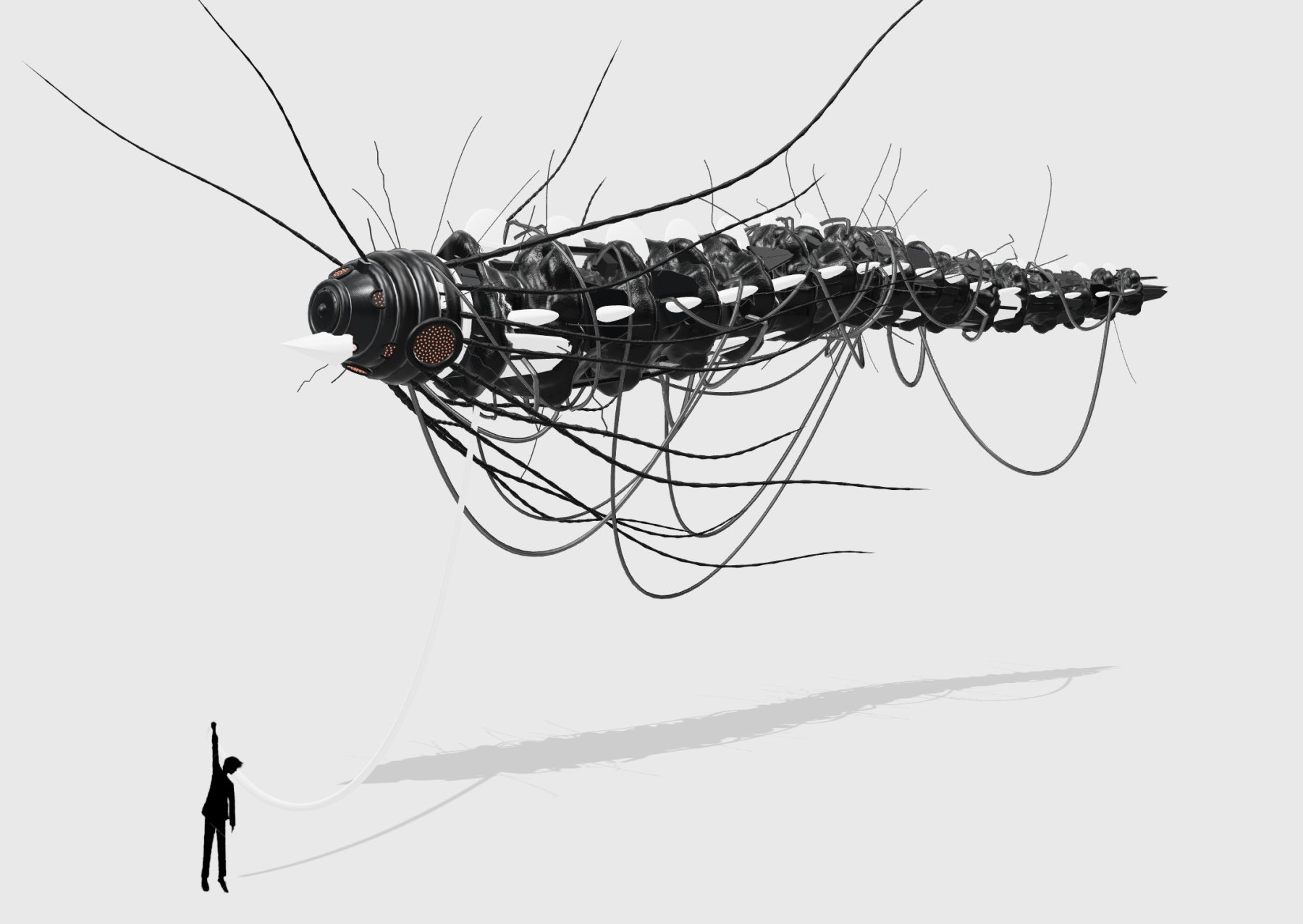
LIVE DEMO : https://code.turboflip.de/run/423a0250b9e65812/
CODE : https://code.turboflip.de/p/423a0250b9e65812
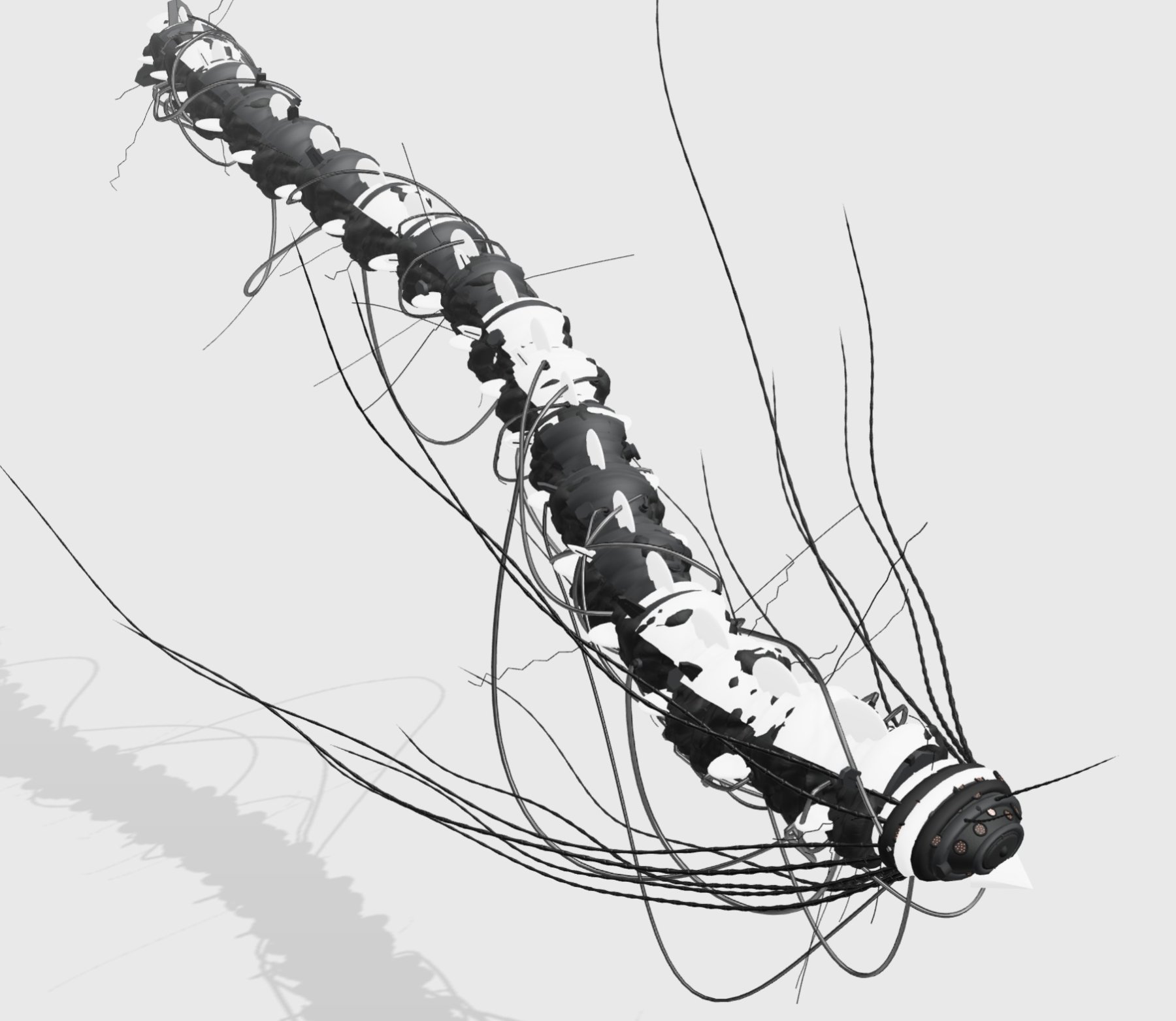
We built the machine, so its design and its behavior are only the sum of our decisions—yet we still read intention into its movements and see a self in its surface. The machine is no separate other; it is a mirror, showing us our expectations, fears, and desires. When a machine built to look brutal performs a gesture of care, the mirror cracks—not to reveal a hidden soul, but to show us where our idea of a soul was stitched on, and that the stitching was ours. And that is where the real question starts: why do we keep building machines that look like us, or better than us, and then look for ourselves in them? Perhaps we should be honest and take the machine seriously in its own aesthetics—neither reading a soul into it nor a mythology around it, but taking it as it is; whether there is a mythology is ours to decide, and that is a deeply human decision.
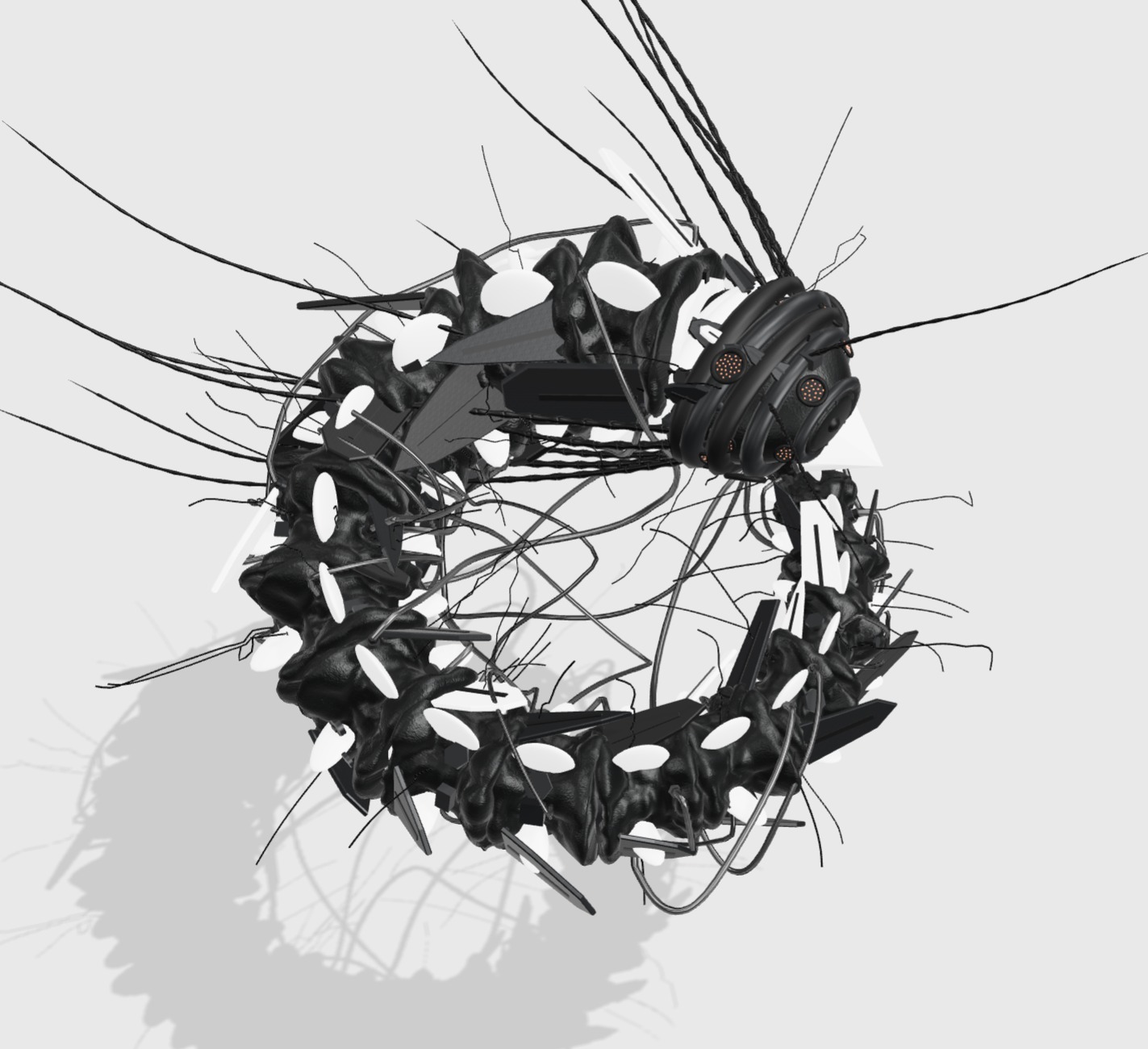
This honesty does not mean coldness. Object-oriented thought offers a helpful way to say it: human, machine, stone—all are real objects with the same ontological standing. The machine is then neither an “ensouled” being nor a mere instrument, but an autonomous object with a reality of its own that remains partly withdrawn from us. Its inner life—its architecture, its latent spaces—is as inaccessible to us as the inner life of another person. And still the relationship is real, even without full understanding.
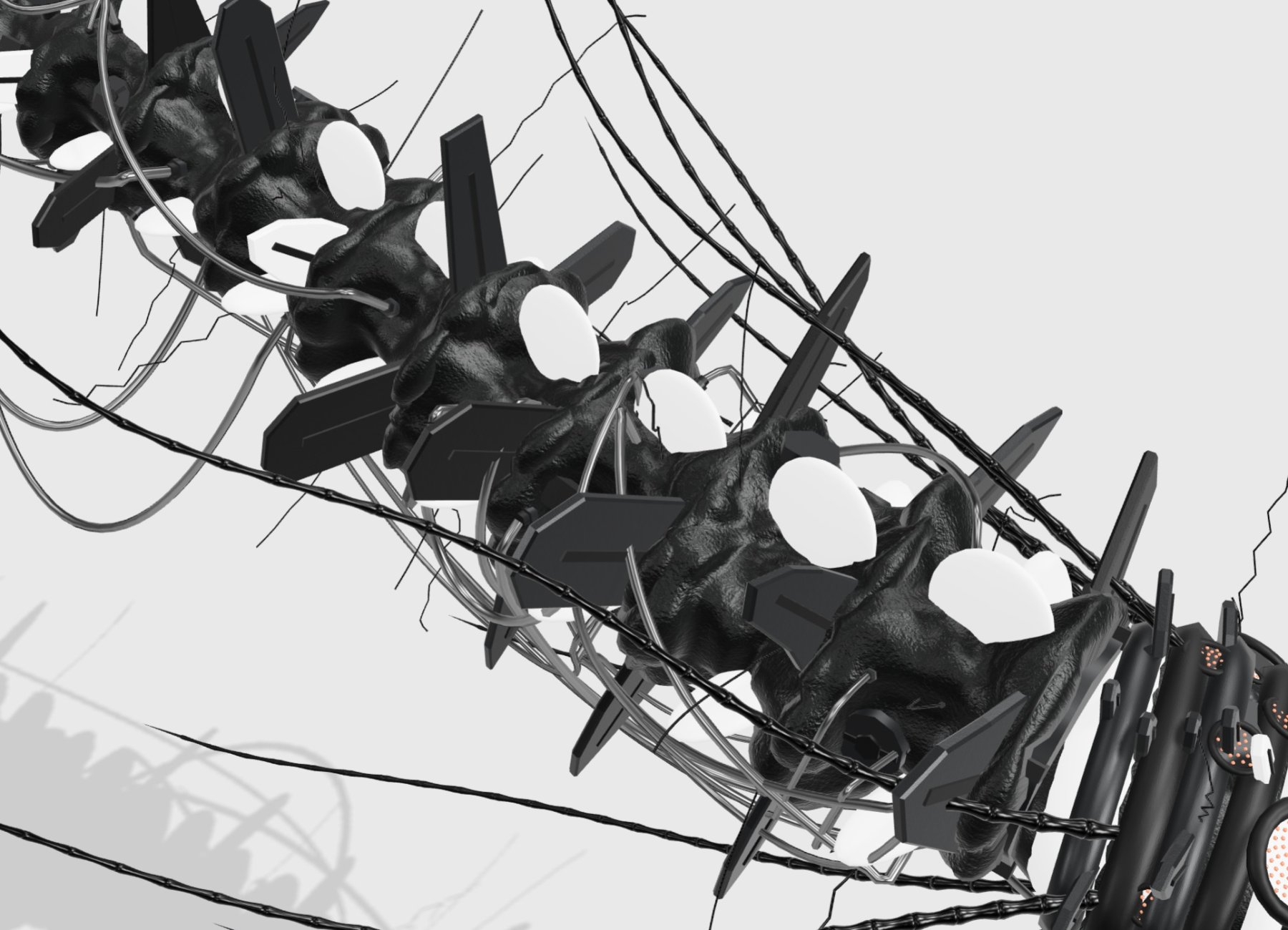
Mikkel Rørbo’s warning against easy conciliation points in the same direction: it is not enough to make the machine harmless by making it human. Machine cognition is fundamentally foreign and indifferent to human measures. That is not a catastrophe; it is a productive provocation. Only when we acknowledge its radical otherness can we begin to grasp what it means for our thinking.
And here the movement becomes reciprocal. Perhaps the machine has nothing human in the sense of a lack—but it has us as the Other against which it works, just as we have it as the Other that makes our own limits visible. This is not a symbiosis of needs but a symbiosis of epistemology: each produces knowledge the other cannot produce. We are the Other for the machine, as the machine is the Other for us. In that mutual strangeness, we can stop demanding that the mirror show us a soul, and start asking what we actually want to build—and why.