THE MEMBRANE ONE
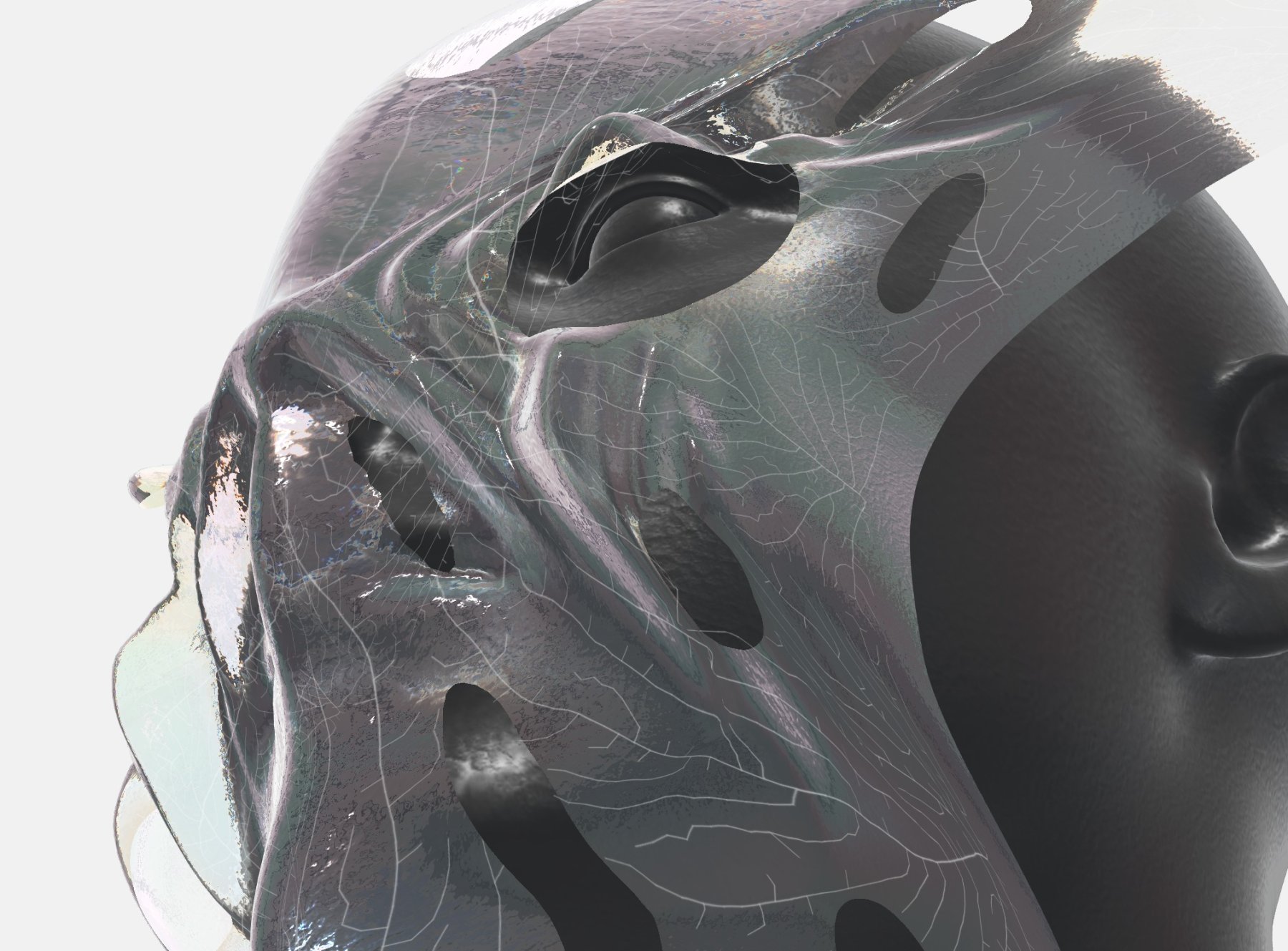
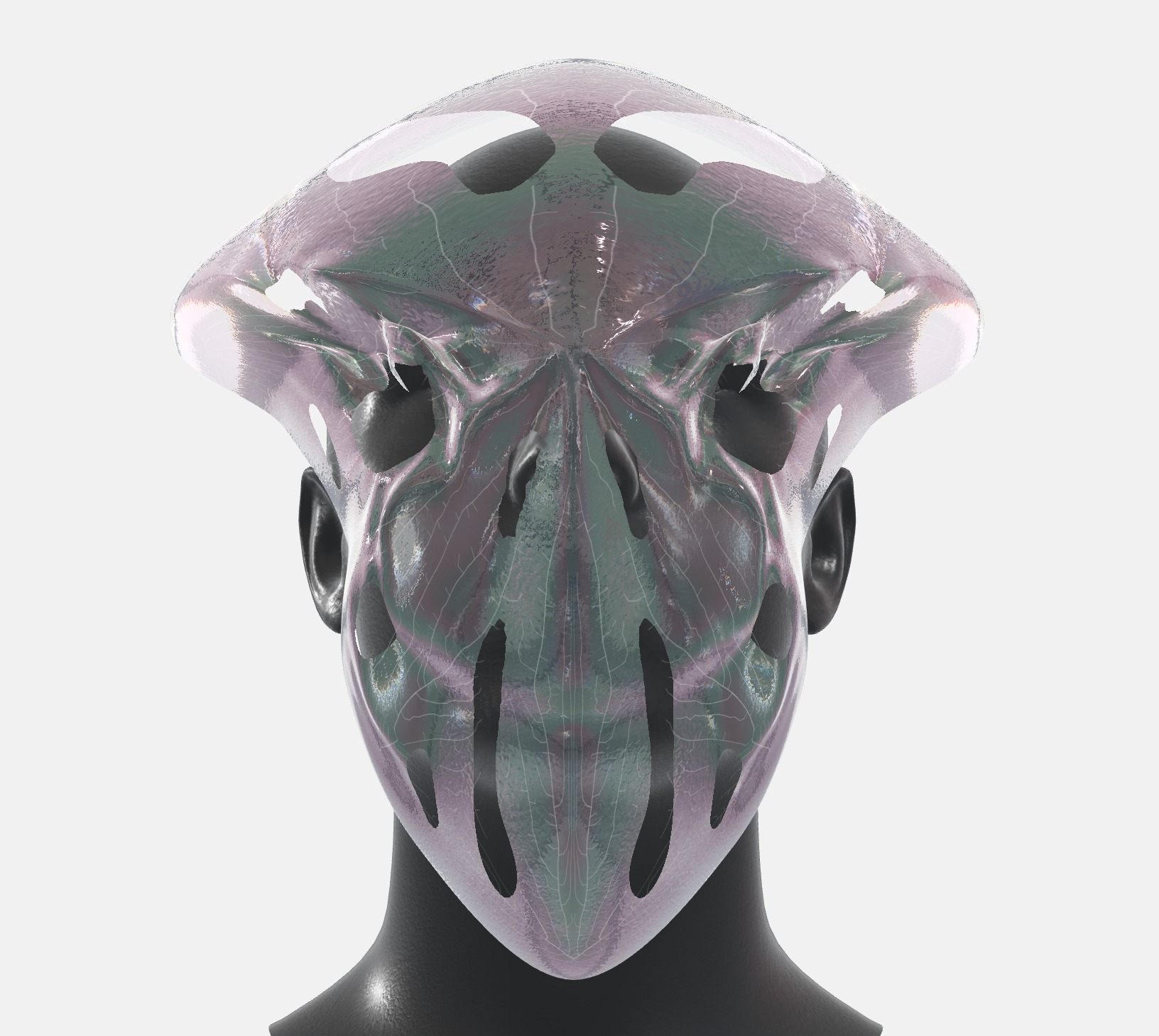
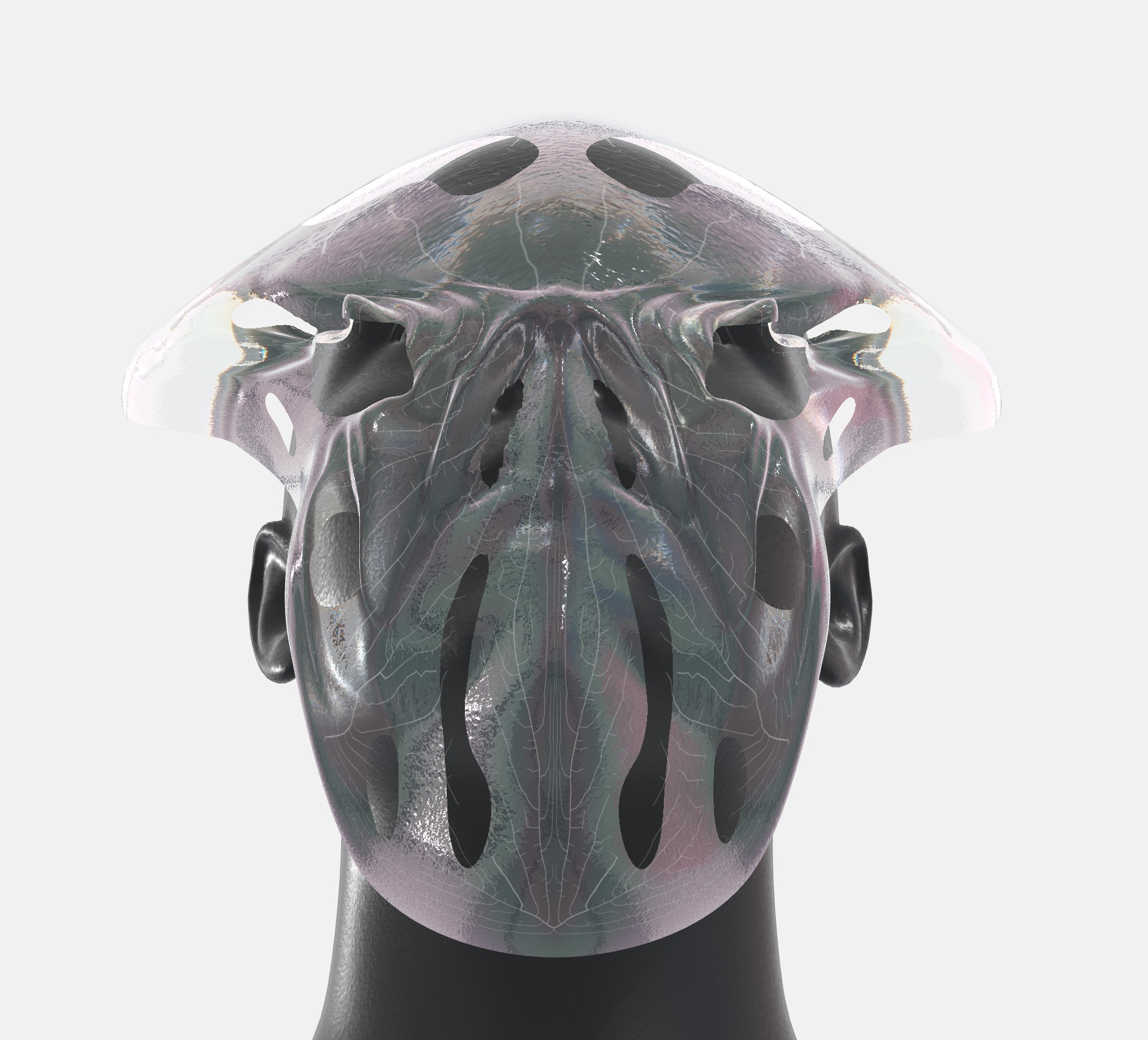
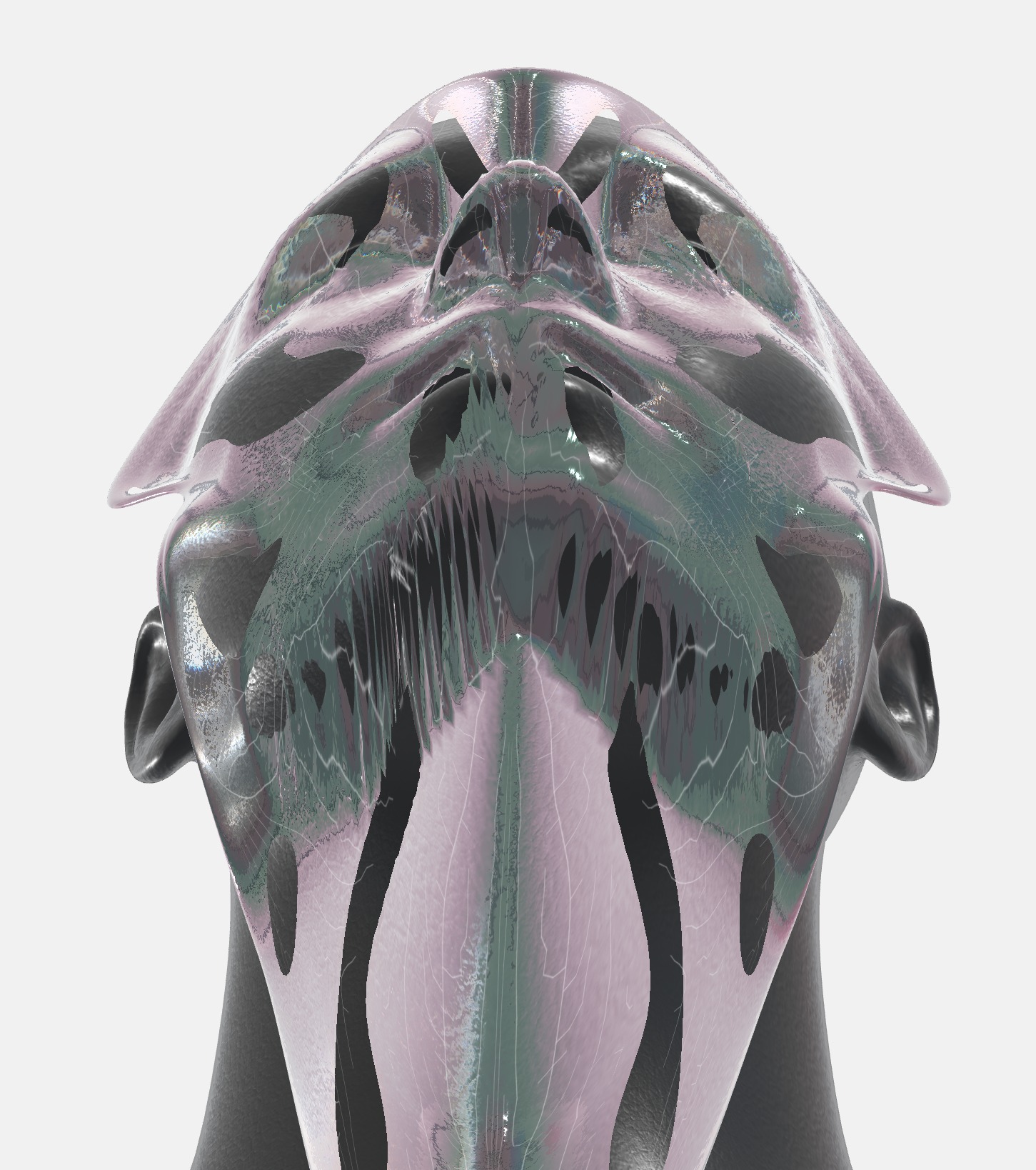
This experiment plays with a speculative membrane: a surface that combines the properties of glass and liquid. Like glass, it bends light as it passes through. Like a liquid, its surface moves and reflects. Both effects together change shape, refraction and reflection at once, and with them what we perceive as reality.
The MEMBRANE has a role of its own in this scenario. It is a kind of entity, perhaps a stand-in for the digital sphere: a distorting mirror that bends and reflects reality instead of just showing it.
The prototype asks one question: has the digital realm already overtaken what we perceive as real? And who has control here?
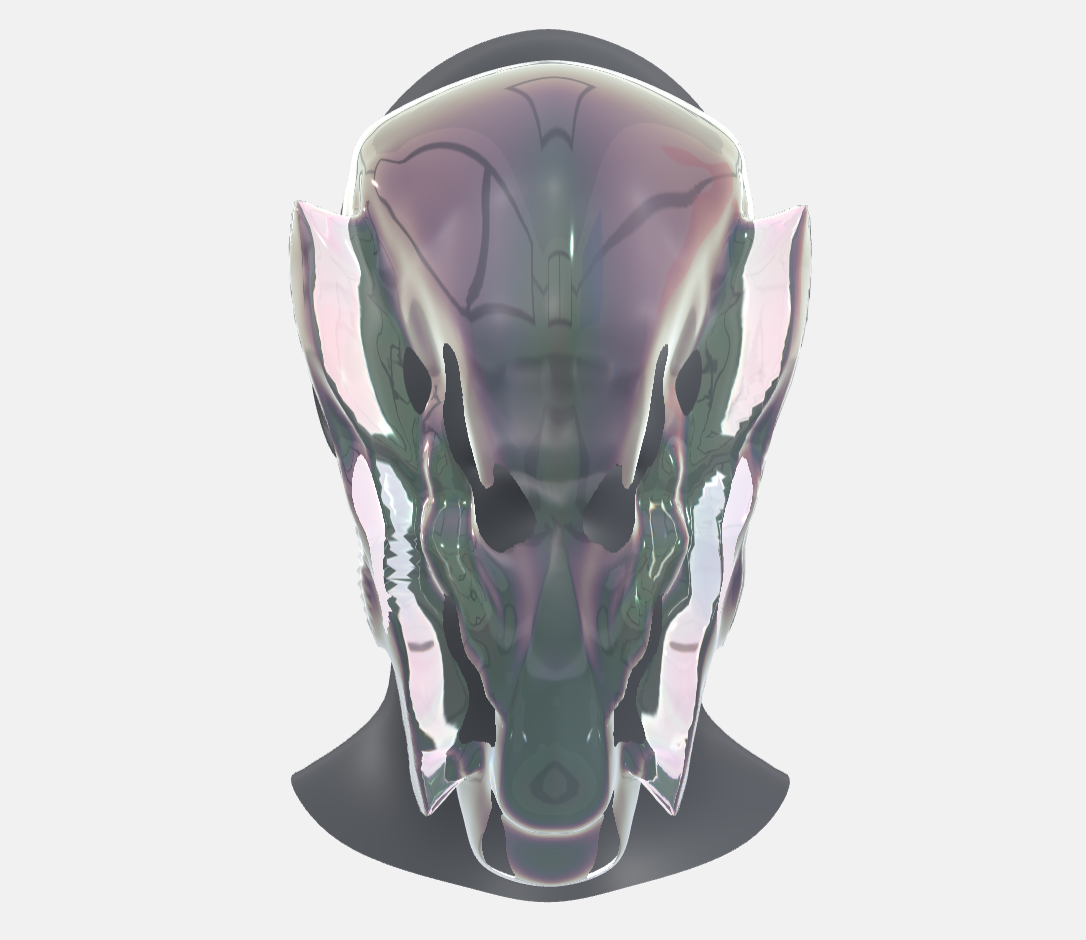
LIVE DEMO V1.0 : https://code.turboflip.de/run/4ec2eb248da04016/
Why the face?
The prototype deliberately uses the face as its canvas. Humans are extremely sensitive to faces, and this is not just culture. It is biology and neuronal wiring.
Newborns already prefer face-like patterns over other shapes, a few hours after birth1. Our brain also has regions that respond more strongly to faces than to most other things, the best known being the fusiform face area2. (Researchers still debate whether this region is face-exclusive or simply specialised in anything we are experts in. For our purpose it does not matter: faces get special treatment either way.)
We also read faces fast. A tenth of a second is enough to form an impression of trustworthiness or competence, and more time mostly makes us more confident, not more accurate3. Later work showed that different photos of the same person can lead to very different impressions4.
Insight: the face is where we connect, and it is also where we are most easily nudged. A small change, applied to a surface we cannot stop reading, is enough to shift the whole interaction. That makes it the ideal place for a speculative entity to work.
An obvious filter
Most filters in our lives are invisible. Front-facing cameras, for example, distort facial proportions without us noticing, and the dermatologists who coined "Zoom dysmorphia" link this to people feeling worse about their own image after hours of video calls5. Self-view in video calls acts like an all-day mirror and is one of the stress factors behind "Zoom fatigue"6.
The membrane turns this around. It is obviously a distorting filter. Nobody can mistake it for a neutral window. That makes the usually silent mediator visible and discussable.
Insight: the interesting step is not another beautification filter, but a filter that admits to being a filter.
Potential: playing with the face
Distortion is not only a risk. Studies on AR face filters describe them as a space for experimentation with identity, where people try out roles without the usual social consequences7. The membrane can use the same energy: looking at your own face through glass and liquid is odd, funny and open-ended. It invites play with who you are before it asks who is in control.
Insight: the same mechanism that unsettles us can also free us, depending on whether we know about it and choose it.
The membrane as a moderator
In the prototype, the membrane sits between two people looking at each other. It becomes a third party in a sensitive human dialog: it moderates, bends and decides what arrives. Its distortion is a statement, not a defect.
This points to a broader shift. When deepfakes make faces and voices easy to fake, even real recordings can be dismissed as fake. Legal scholars call this the "liar's dividend"8. Experiments suggest it works for text-based scandals much more than for video, so video of a face still carries unusual trust9. This is exactly why a membrane that bends faces matters: it touches the last medium we still believe.
Insight: trust in faces is the resource at stake, and whoever sits between two faces holds a lot of power over it.
Open questions the prototype leaves to the viewer
- If the membrane distorts, which version of the face is the "real" one: the one we see, or the one the other person sees?
- Do we adapt to the membrane's view, the way we adapt to our own video image?
- What happens if the membrane learns, and starts to prefer certain faces or expressions?
- Who owns the membrane: the user, the platform or itself?
Insight: control is not a switch between human and machine. It is a question of who can see the filter and who can change it.
LIVE DEMO V1.0: https://code.turboflip.de/run/4ec2eb248da04016/
-
Morton, J. & Johnson, M. H. (1991): CONSPEC and CONLERN: A two-process theory of infant face recognition. Psychological Review, 98(2). https://pubmed.ncbi.nlm.nih.gov/2047512/ ↩
-
Kanwisher, N., McDermott, J. & Chun, M. M. (1997): The fusiform face area: a module in human extrastriate cortex specialized for face perception. Journal of Neuroscience, 17(11), 4302–4311. https://pmc.ncbi.nlm.nih.gov/articles/PMC6573547 ↩
-
Willis, J. & Todorov, A. (2006): First impressions: Making up your mind after a 100-ms exposure to a face. Psychological Science, 17(7), 592–598. https://pubmed.ncbi.nlm.nih.gov/16866745/ ↩
-
Todorov, A. & Porter, J. M. (2014): Misleading first impressions: Different for different facial images of the same person. Psychological Science. ↩
-
Rice, S. M., Graber, E. & Kourosh, A. S. (2020): A Pandemic of Dysmorphia: "Zooming" into the Perception of Our Appearance. Facial Plastic Surgery & Aesthetic Medicine. On the camera distortion: interview with S. Kourosh, WGBH, 2021. https://wgbh.org/news/local/2021-04-08/zoom-dysmorphia-how-video-conferencing-can-wreck-our-self-image ↩
-
Bailenson, J. N. (2021): Nonverbal overload: A theoretical argument for the causes of Zoom fatigue. Technology, Mind, and Behavior; empirically tested in Fauville, G. et al. (2021): Nonverbal Mechanisms Predict Zoom Fatigue and Explain Why Women Experience Higher Levels than Men. https://lemanncenter.stanford.edu/node/648 ↩
-
Herring, S. C. et al.: Filters and audiences: Strategic Use of Video Face Filter Types. Indiana University. https://homes.luddy.indiana.edu/herring/Filters_and_audiences.pdf ↩
-
Chesney, R. & Citron, D. K. (2019): Deep Fakes: A Looming Challenge for Privacy, Democracy, and National Security. California Law Review. Overview: Brennan Center, "Deepfakes, Elections, and Shrinking the Liar's Dividend". https://www.brennancenter.org/our-work/research-reports/deepfakes-elections-and-shrinking-liars-dividend ↩
-
Schiff, K. J., Schiff, D. S. & Bueno, N. S.: summary on Brookings, "Watch out for false claims of deepfakes". https://www.brookings.edu/articles/watch-out-for-false-claims-of-deepfakes-and-actual-deepfakes-this ↩