ZEITGEIST
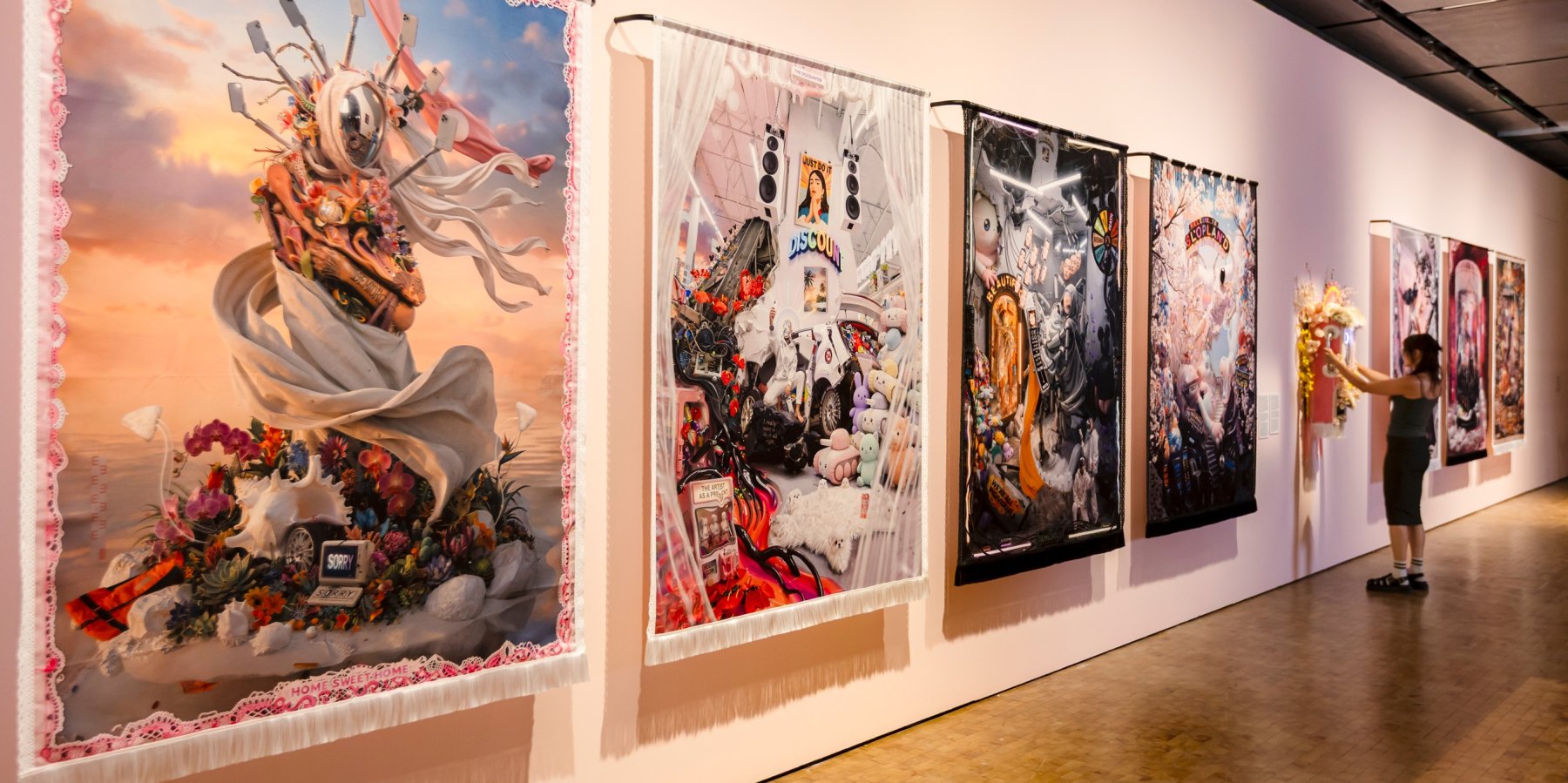
ZEITGEIST consists of seven textile wall hangings that together form a single, closed narrative. The series traces the stages of a reckoning and draws on the idea of a tech-gnosis, borrowing from late-antique religious philosophy and Gnosticism and their dualism.
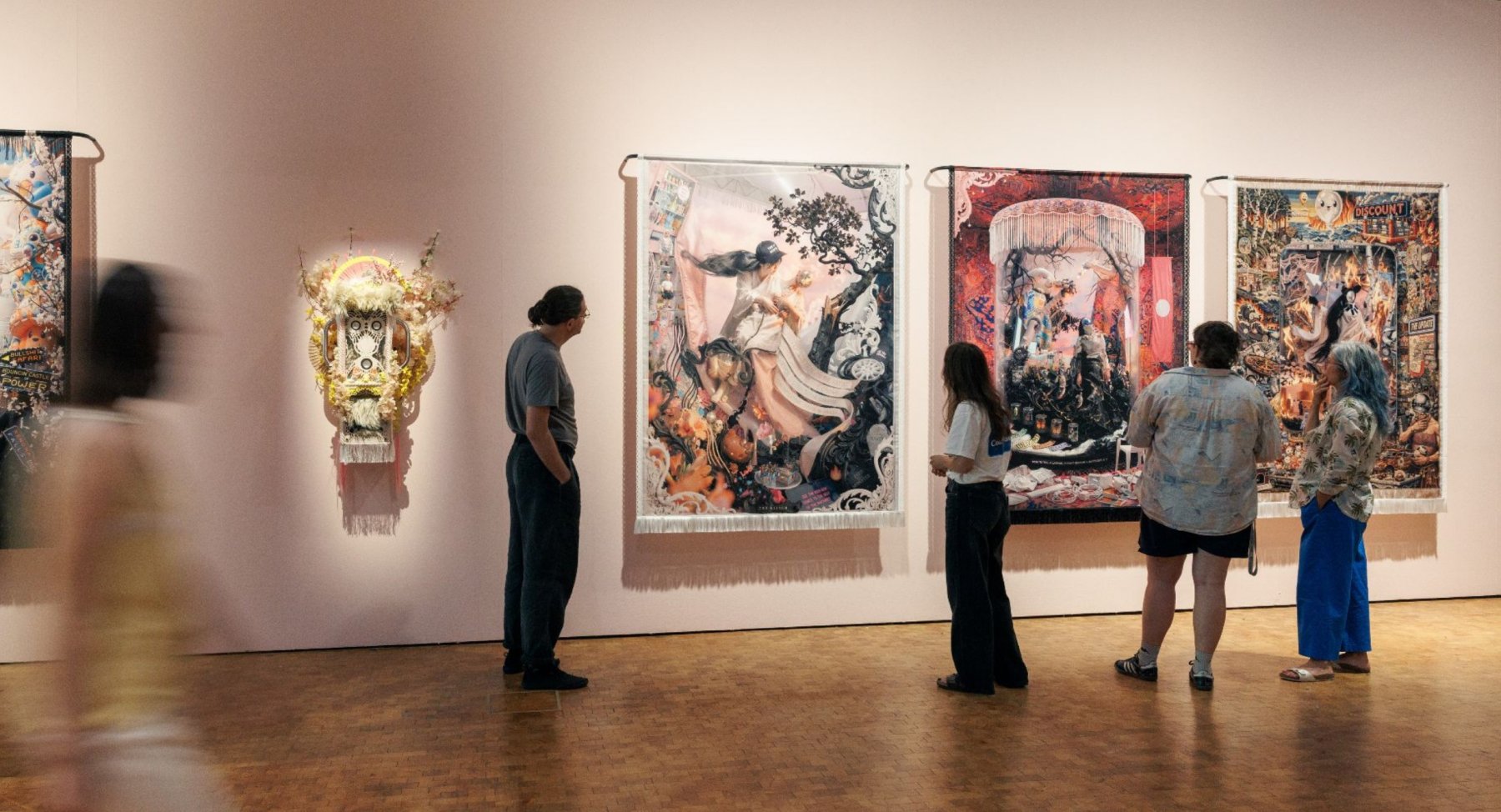
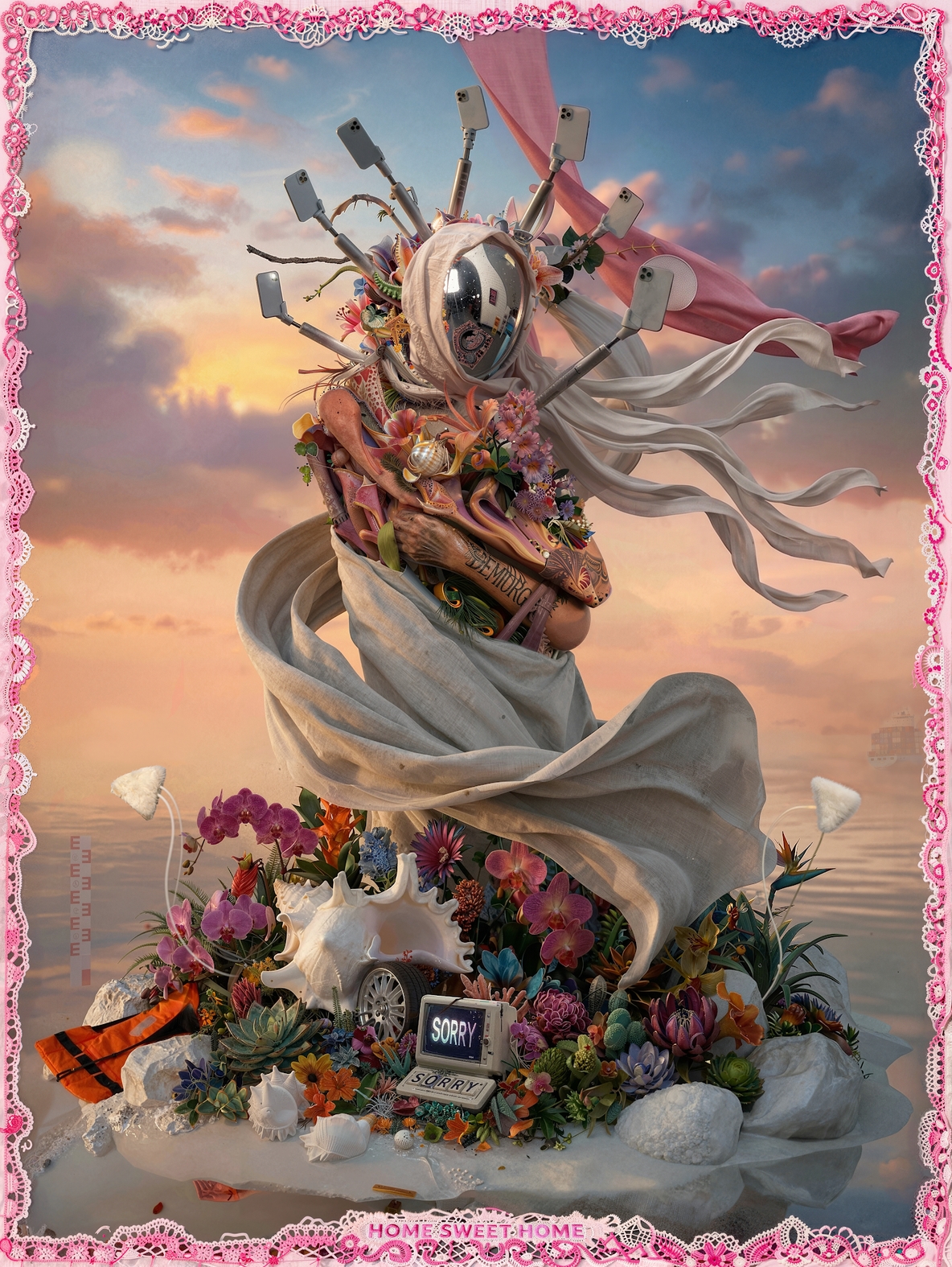
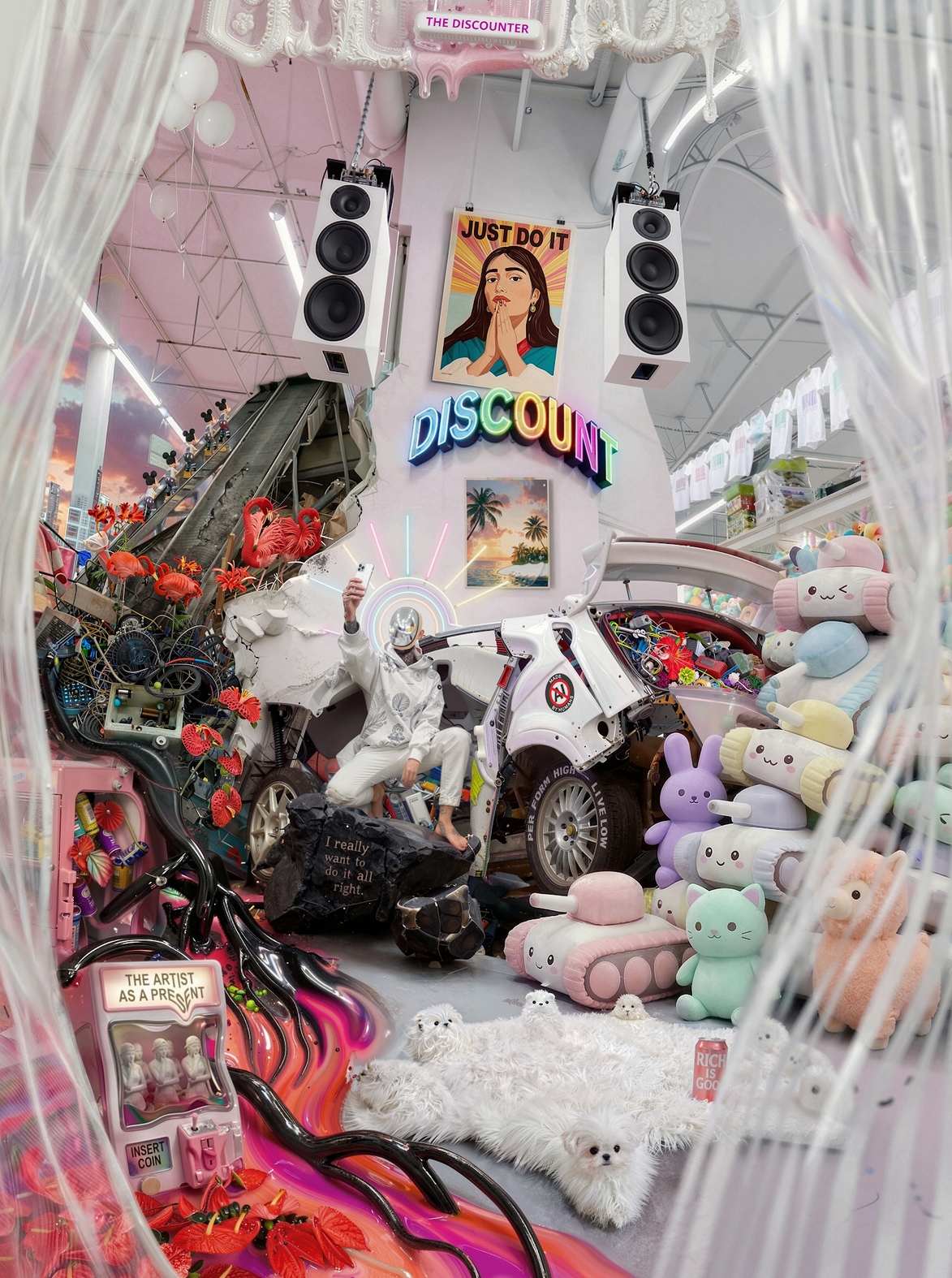
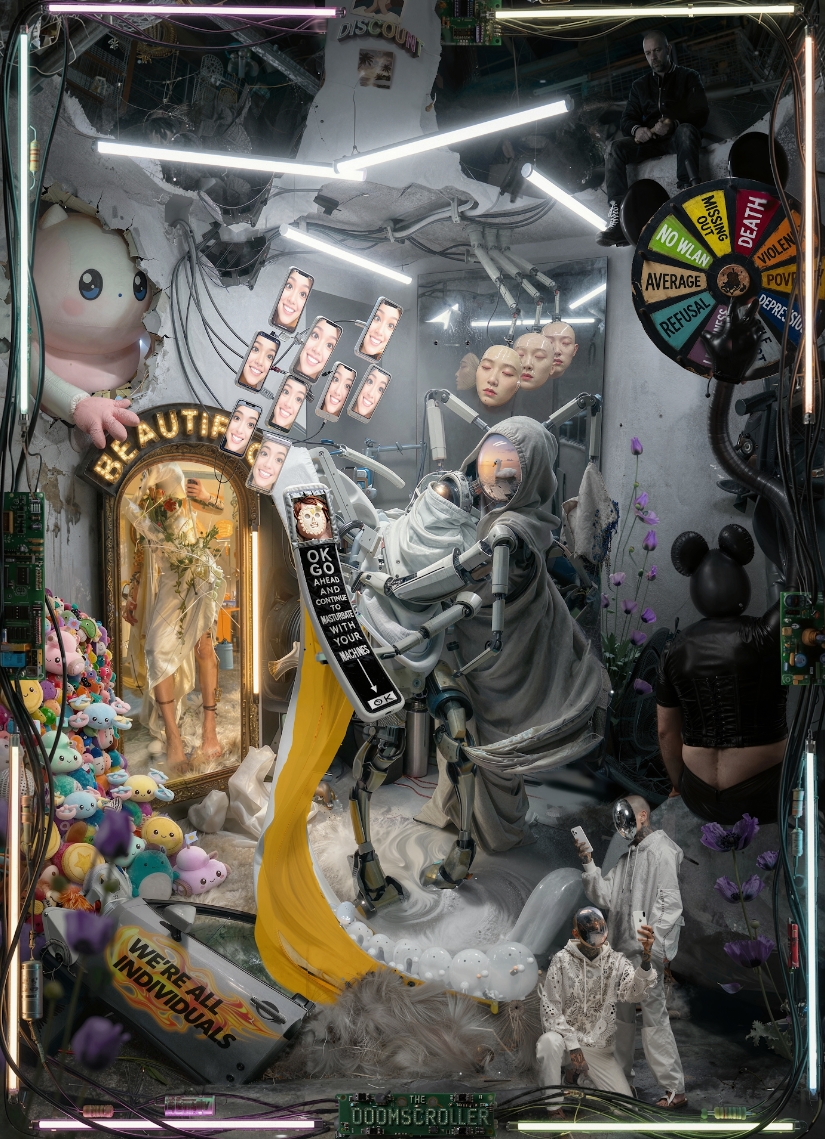
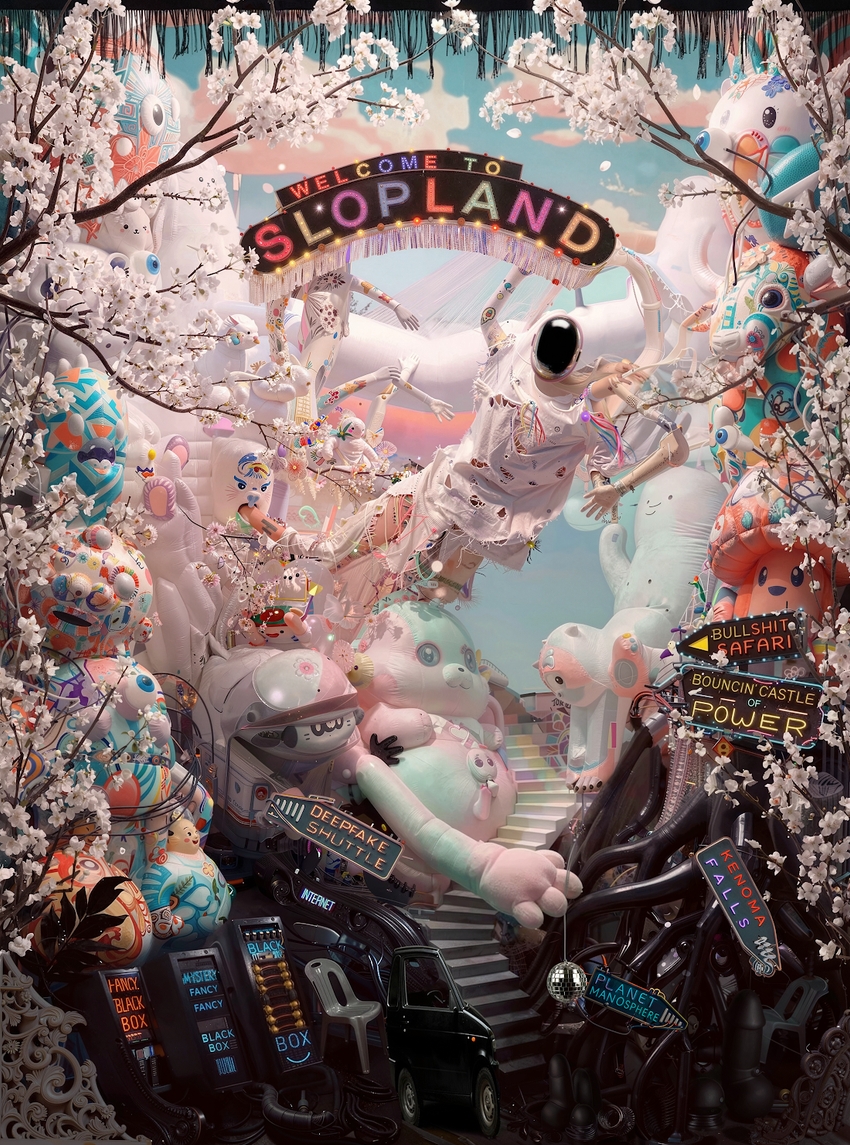
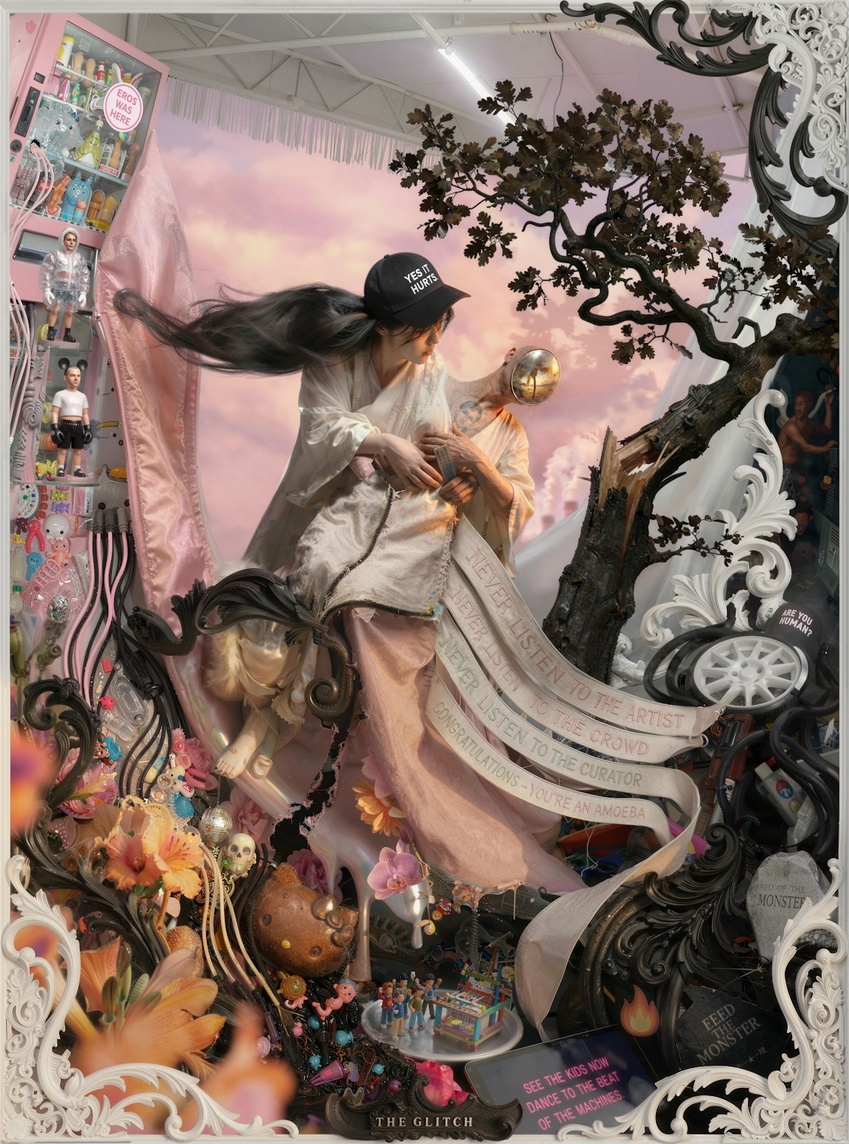
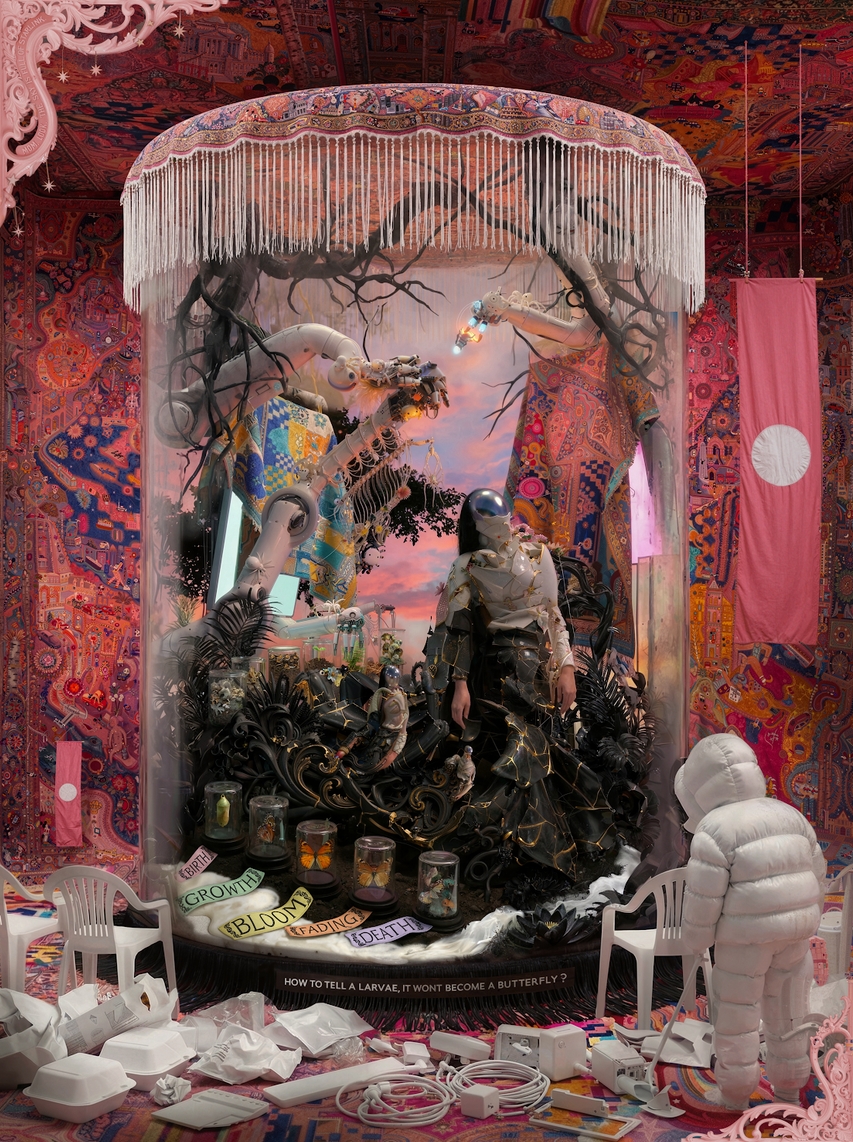
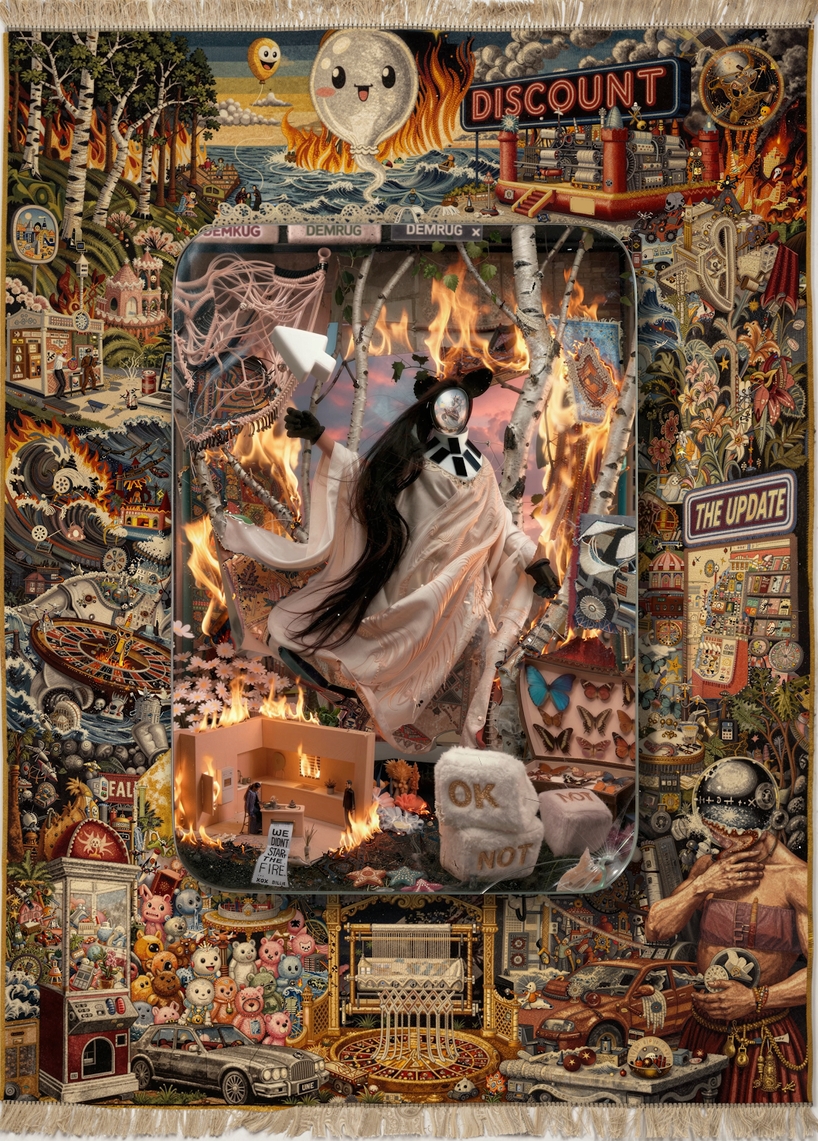
ZEITGEIST, 2026 Series of seven parts Full-colour digital print on duchesse satin, hand-sewn borders and hems, custom aluminium wall mounts 140 × 200 cm each
Statement of the artist
ZEITGEIST consists of seven textile wall hangings that together form a single, closed narrative. The series traces the stages of a reckoning: from initial self-deception through decline to the abyss, where a decisive rupture forces reconstruction — a return to the old status quo, but in new garb and with new insight. The arc closes. And that is precisely the point: it closes only in order to begin again.
For ZEITGEIST argues that in the late-digital present there is no Pleroma left to return to — no final redemption, no exit from the cycle. There is only the next patch. Every insight won becomes a rung for the next descent. What classical Gnosticism imagined as a singular homecoming tips over here into eternal recurrence — Nietzsche crossed with the update cycle.
The work draws on the idea of a tech-gnosis, borrowing from late-antique religious philosophy and Gnosticism and their dualism: a distant, transcendent God set against a lesser creator god, the Demiurge. In the ancient sources this Demiurge is above all ignorant and arrogant. ZEITGEIST deliberately recasts him — as the seductive creator god of the feed: the algorithm, the platform, the dopamine loop. He lures us and leaves us wavering between emptiness (Kenoma) and fullness. His instruments are technosolutionism, media addiction, consumption, greenwashing.
That there are seven hangings is no coincidence. In gnostic-hermetic cosmology the soul descends through seven planetary spheres, taking on a vice at each stage, and sheds them again on the way back up. Seven stations of the fall, seven of the ascent. The series follows that path: HOME SWEET HOME (self-deception), THE DISCOUNTER and THE DOOMSCROLLER (the descent), WELCOME TO SLOPLAND (the abyss), THE GLITCH (the rupture), THE METAMORPHOSIS (reconstruction), and THE UPDATE — the old status quo in new garb, and at the same time the seed of the next fall. The glitch is the decisive rupture: the malfunction through which the system briefly gives away its own construction.
At the centre of each episode stands the same figure, its face sealed by a striking mirror mask. The mask conceals the figure's identity while becoming a projection surface for the viewer. It has a precise source: in the hermetic Poimandres, the primordial human falls into the material world because he catches sight of his own beautiful reflection there and falls in love with it. The fall begins not with guilt but with self-infatuation. The mirror mask repeats exactly this: whoever looks into it sees themselves — and, like the primordial human, falls in love with their own image. In the age of the selfie and the feed, this is the original fall in its purest form. And the mirror does not stay passive: it throws viewers back upon themselves. They do not stand at a safe distance before the scene but inside the picture — implicated, not devout.
The force driving this rise and fall is Eros — and ZEITGEIST deliberately gives it two faces. As the Demiurge's instrument, it is Eros that drags us downward, binding us to images, objects and desire. At the same time, in the Platonic tradition of Diotima's ladder, it is the only force that lifts us back up. This is the work's actual thesis: the very force with which the Demiurge captures us is the force that carries us through the rupture and out of the emptiness. Seduction and salvation share a single instrument.
The material plays the same game. The hangings are not woven but printed on woven fabric — they merely feign the elaborate craft of tapestry. This feigning is intentional, and it is the sharpest trap in the work: the print counterfeits handwork, aura and centuries of labour where none of it exists. The medium thus enacts the very seduction it depicts — a beautiful surface promising fullness and delivering emptiness, exactly like the feed. Form and content collapse into one another. The imagery lives off the same incongruity: sacred compositions drawn from religious painting across several epochs are transposed into the banal consumer interiors of the Global North. Camp becomes a critical method here — it is the break between altarpiece and discount-store interior that produces the critique.
There is no resolution at the end. The figure has completed the path, wears its new garb — and still holds out to us the blank surface of its face. Anyone who recognises themselves in it has already taken the first step, for recognition is not the end of the fall but its beginning. The Demiurge needs no lie to keep us. The truth will do, so long as it is beautiful enough. And so a single question remains open, addressed not to the figure but to us: not whether we will fall again, but which of the seven episodes we are standing in right now.